
Understand myostatic contracture, including its definition, causes, clinical features and treatment approaches such as stretching, therapeutic exercises and range-of-motion techniques used in physiotherapy.
Definition
Contracture is defined as the adaptive shortening of the muscle-tendon unit and other soft tissues that cross or surround a joint that results in significant resistance to passive or active stretch and limitation of ROM, and it may compromise functional abilities.
Myostatic Contracture
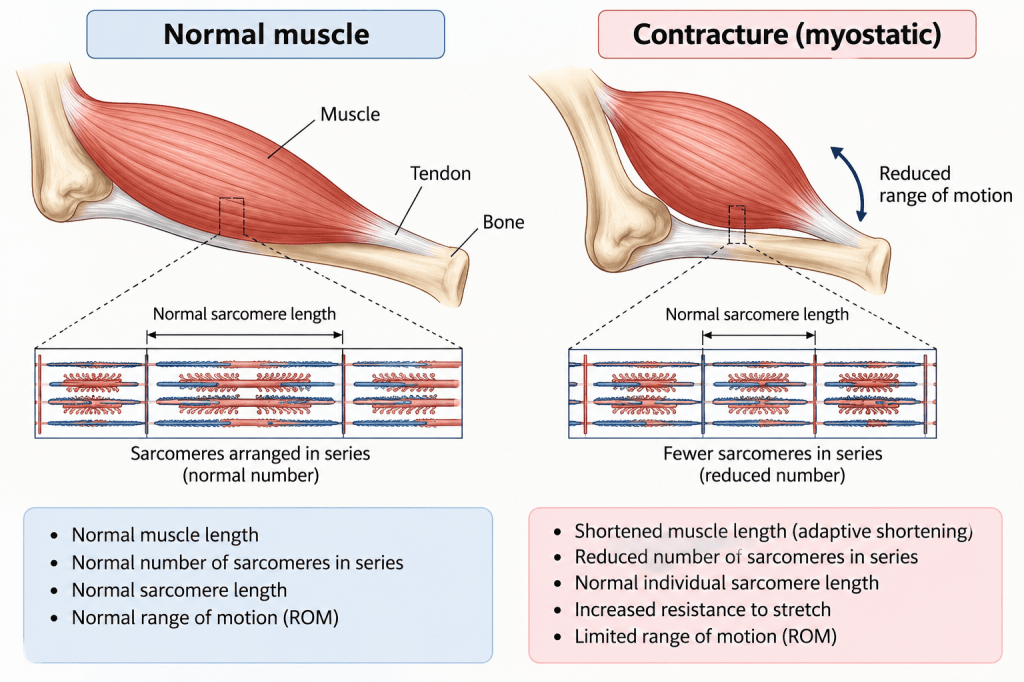
Myostatic contracture is a condition characterized by adaptive shortening of the musculotendinous unit, resulting in restricted joint range of motion (ROM) and increased resistance to passive stretching, without any specific pathological changes in the muscle tissue.
Although the muscle-tendon unit becomes shortened, the individual sarcomeres retain their normal length. However, there may be a reduction in the number of sarcomeres arranged in series. This type of contracture is generally reversible and can be managed effectively with stretching exercises.
Causes
- Prolonged immobilization of a joint or limb.
- Maintaining a muscle in a shortened position for an extended period.
- Reduced physical activity and lack of regular stretching.
- Prolonged bed rest following illness, injury, or surgery.
- Inadequate joint movement due to pain or protective muscle guarding.
Treatment
- Stretching exercises: Regular, gentle stretching helps restore muscle length and improve joint ROM.
- Passive range-of-motion exercises: The therapist moves the affected joint through its available range to reduce stiffness and maintain mobility.
- Active range-of-motion exercises: The patient actively moves the joint to maintain flexibility and improve movement.
- Prolonged low-load stretching: Sustained, gentle stretching may help gradually restore the length of the shortened musculotendinous unit.
- Positioning and splinting: Appropriate positioning or splinting may help maintain the muscle at an optimal length when clinically indicated.
- Functional exercises: Activities involving normal joint movement help maintain flexibility and improve functional mobility.
- Patient education: Patients should be encouraged to avoid prolonged positions that keep muscles shortened and to perform regular movement and stretching exercises.
References:
- Kisner, C., Colby, L. A., & Borstad, J. (2023). Therapeutic Exercise: Foundations and Techniques (8th ed.). F. A. Davis Company. Refer to the sections on contracture, stretching for improved mobility, and the effects of immobilization on soft tissues.
- Dutton, M. (2025). Dutton’s Orthopaedic Examination, Evaluation, and Intervention (7th ed.). McGraw Hill. Refer to the sections on musculoskeletal examination, rehabilitation, and therapeutic interventions.
For more notes click on:

